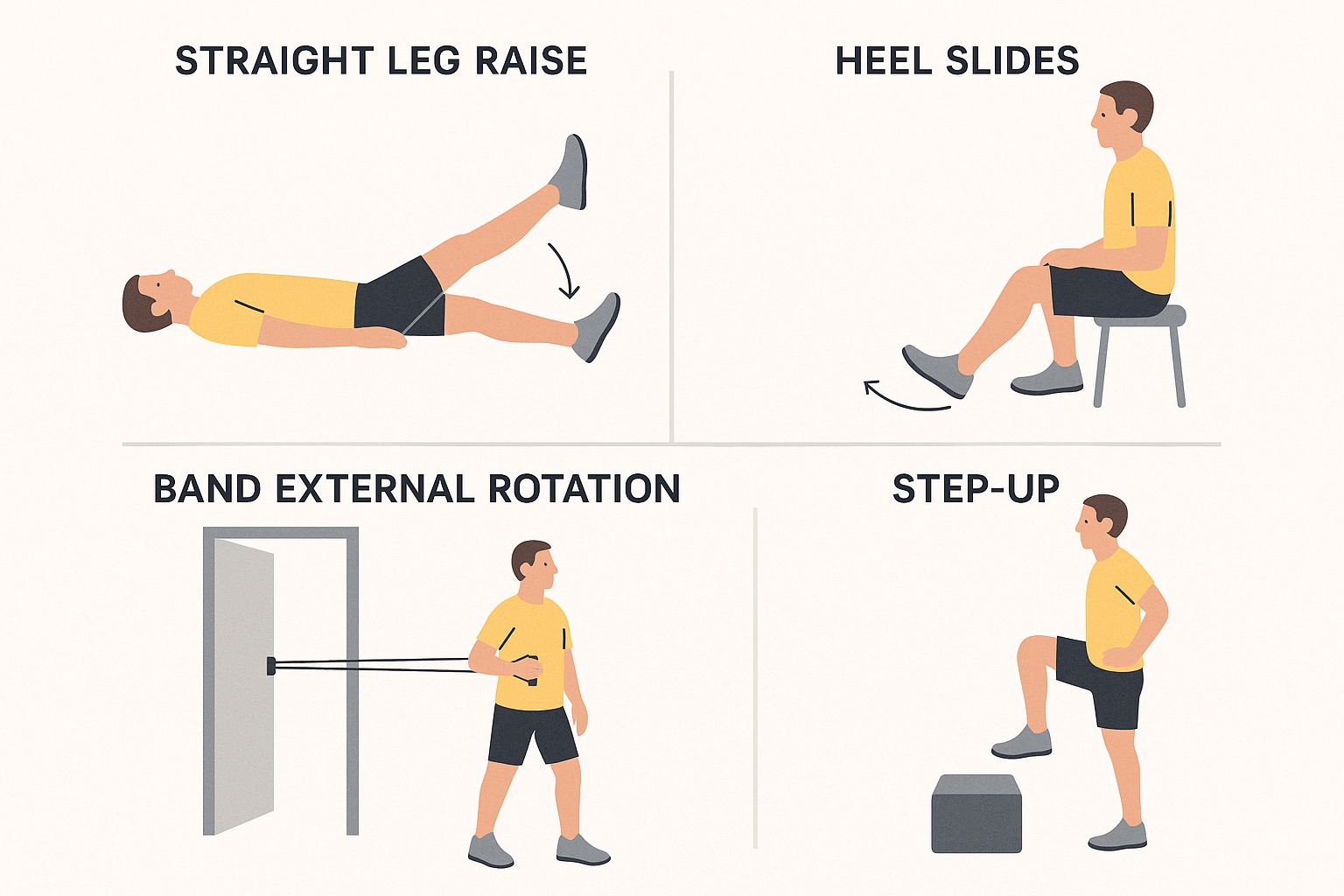
PHYSIOTHERAPY PROTOCOL IN SPORTS RECOVERY:
We live in an era where athletes have access to cryotherapy chambers, blood flow restriction
devices, and real-time biomechanical feedback, yet research consistently shows no single
recovery strategy demonstrates universal effectiveness.
Why? Because we've been asking the wrong question. Instead of "Which recovery modality is
best?" we should ask:
"Why are we using this recovery strategy for this athlete at this moment?"
1. Context-Driven Decision
Making Recovery isn't a ritual—it's a response. Before prescribing any modality, I ask:
●
What was the training stimulus? Strength sessions respond differently to recovery
than aerobic work or technical drills. Research shows massage may be effective after
high-intensity mixed exercise (+14.4% improvement) but shows minimal benefit after
endurance training (+1.3%).
●
What's the turnaround time? Short recovery windows (less than 24 hours) require
different strategies than multi-day recovery periods. If you have less than 10 hours
before the next session, skip the cooling—active recovery or circulatory-based strategies
maintain muscle temperature and enhance subsequent performance.
●
What's the training phase? A recovery strategy during pre-season conditioning may
be counterproductive during competition phases. Periodization isn't just for training
load—it applies to recovery, too.
2. Criterion-Based Progression, Not Time-Based Guesswork
One of the most dangerous phrases in sports medicine is "give it two weeks.
" Time is a poor
proxy for tissue healing and functional readiness. The Delphi consensus study involving 58 FIFA
Medical Centres worldwide established clear return-to-play criteria that I implement religiously:
Medical Clearance Criteria:
●
●
●
●
Absence of pain on palpation
Pain-free strength testing (minimum 90-95% limb symmetry index)
Pain-free flexibility testing with equivalent range between limbs.
Successful completion of progressive functional testing.
●
●
Performance benchmarks on sport-specific field testing.
Psychological readiness (often overlooked but critical) Notice what's missing? A
timeline. The athlete progresses when they meet criteria, not when a calendar date
arrives.
3. Load Management: The Unsung Hero of Recovery
The secret to optimal recovery isn't what you do between sessions—it's managing what
happens during sessions. Emerging evidence on training load management shows that proper
periodization with embedded recovery phases reduces injury risk by mitigating training
monotony and overload.
4. The Multifaceted Nature of Recovery Physiological Recovery:
Recovery operates across interconnected domains. Treating only the physiological while
ignoring psychological dimensions is like tuning an engine but ignoring the steering wheel.
Physiological Recovery:
●
Tissue healing and remodeling
●
Glycogen repletion (timing matters: CHO intake within 2-4 hours post-exercise enhances
subsequent endurance performance by 4.97W mean power output)
●
Neuromuscular restoration
●
Inflammatory regulation
Psychological Recovery:
●
Fear of re-injury (present in 65% of post-injury athletes)
●
Athletic identity maintenance (young athletes specifically request to be treated as
"athletes who happen to be injured,
" not "injured people")
●
Confidence restoration
●
Social connection (isolation during rehabilitation is a consistent concern across athlete
populations)
5. Shared Decision-Making: The Non-Negotiable Foundation
Research in elite youth athletes reveals a disturbing pattern: athletes felt responsible for
communicating rehabilitation progress between physiotherapists and coaches, creating
miscommunication chains that increase re-injury risk. This is unacceptable.
What the Evidence Actually Says About Popular Modalities
Let me cut through the noise with what high-quality systematic reviews actually demonstrate:
1. Cryotherapy (Ice Baths, Cold Water Immersion)
Evidence Grade: Mixed
-
-
May reduce muscle soreness at 24h (SMD = -0.55), 48h (SMD = -0.66), and 72h
post-exercise
Shows small positive effects on perceived recovery (ES = 0.66) after
high-intensity work.
2. Compression Garments
-
-
-
Evidence Grade: Moderate-to-Large Effects.
Most effective 24 hours post-exercise (ES = 1.03-1.33)
Enhances strength recovery (ES = 0.62), particularly after metabolic/aerobic work.
Practical application: Wear for 12-24 hours post-training or competition.
3. 4. Sports Massage Evidence Grade: Marginal-to-Minimal
-
Small benefits for short recovery periods (<10 minutes).
-
May improve flexibility (SMD = 1.07) and reduce DOMS (SMD = 1.13).
-
No significant performance enhancement for endurance athletes.
-
My take: Use for athlete perception and psychological benefit, not as a primary
recovery tool.
Active Recovery Evidence Grade: Context-Dependent
-
Most effective when 6-10 minutes at low-to-moderate intensity.
-
Blood lactate clearance is NOT a reliable recovery indicator (despite popular
belief).
5. -
-
Maintains muscle temperature and neural activation.
Application: Use between same-day sessions or when <12h turnaround.
Nutrition: The Recovery Foundation Evidence Grade:
-
Strong CHO + Protein within 2-4 hours post-exercise significantly improves
time-to-exhaustion (MD = 10.59 min when ≥8h recovery).
-
Chocolate milk is as effective as commercial recovery drinks (contains optimal
CHO:PRO ratio).
-
Curcumin supplementation shows promise for reducing inflammation and
muscle damage.
-
Antioxidant supplements: Despite popularity, show minimal clinically-relevant
benefit for muscle soreness.